Psychometric analysis of the attitudes toward early sexual relationships scale in late adolescents and young adults in Perú
Article Sidebar
Main Article Content
Abstract
Introduction: the lack of instruments to assess attitudes toward early sexual relationships in late adolescents and young adults limits preventive interventions in sexual health.
Objective: to design and validate the Early Sexual Relationships Attitudes Scale (E-ARST).
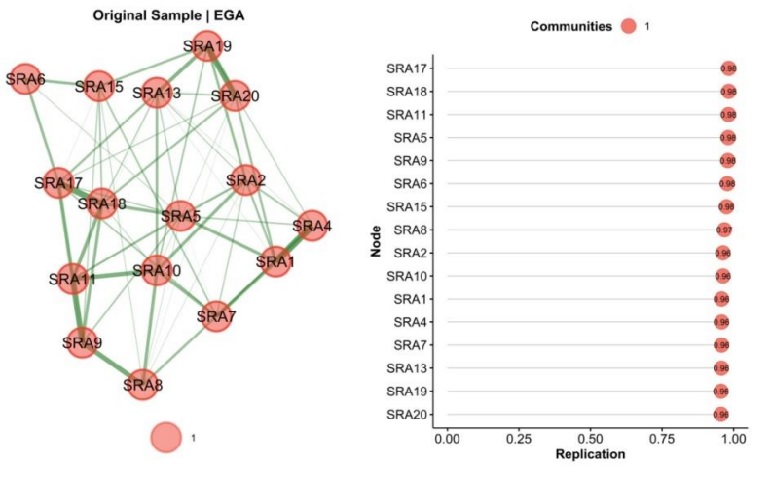
Methodology: instrumental study. Participants included 995 adolescents and young adults aged 18 to 24 years (M = 20.43; 50% male), selected through purposive non-probability sampling in the three regions of Peru. Test construction: 10 stages recommended by psychometric experts, with an initial version of 60 items. Statistical analysis included Aiken's V coefficient, network analysis (EGA), exploratory factor analysis (EFA), confirmatory factor analysis (CFA), internal consistency analysis, and measurement invariance.
Results: according to expert judgment, 20 items proved to be clear, relevant, and representative. The EGA analysis suggested removing 4 items. Subsequently, the EFA (KMO = 0,953, Bartlett's: X2(120) = 2220,1; p = 0,000) revealed a unidimensional structure (63,81 % of total variance), and the CFA validated a final structure of 10 items, with adequate reliability (CFI = 0,985; TLI = 0,981; RMSEA = 0,118; SRMR = 0,027; ω = 0,957). Finally, the scale proved to be invariant by sex, age, region, and relationship status.
Conclusion: the E-ARST is the first validated scale to measure attitudes toward early sexual relationships in Peruvian adolescents and young adults aged 18 to 24 years, facilitating research for prevention and the promotion of reproductive health policies.
Article Details

This work is licensed under a Creative Commons Attribution 4.0 International License.
Usted es libre de:
- Compartir: copiar y redistribuir el material en cualquier medio o formato para cualquier propósito, incluso comercialmente.
- Adaptar: remezclar, transformar y construir a partir del material para cualquier propósito, incluso comercialmente.
- La licenciante no puede revocar estas libertades en tanto usted siga los términos de la licencia
Bajo los siguientes términos:
- Atribución: Usted debe dar crédito de manera adecuada, brindar un enlace a la licencia, e indicar si se han realizado cambios. Puede hacerlo en cualquier forma razonable, pero no de forma tal que sugiera que usted o su uso tienen el apoyo de la licenciante.
- Compartir igual: — Si remezcla, transforma o crea a partir del material, debe distribuir su contribución bajo la misma licencia del original.
- No hay restricciones adicionales — No puede aplicar términos legales ni medidas tecnológicas que restrinjan legalmente a otras a hacer cualquier uso permitido por la licencia.
References
Kaçaj M, Qirjako G, Mone I, Roshi E, Burazeri G. Correlates of very early sexual intercourse among adolescents in a Southeastern European country. Sex Reprod Healthc. 2025;45(371):101116. doi: 10.1016/j.srhc.2025.101116
Brunelli L, Bravo G, Romanese F, Righini M, Lesa L, De Odorico A, et al. Sexual and reproductive health-related knowledge, attitudes and support network of Italian adolescents. Public Heal Pract. 2022;3:100253. doi: 10.1016/j.puhip.2022.100253
Mitchell KR, Lewis R, O’Sullivan LF, Fortenberry JD. What is sexual wellbeing and why does it matter for public health? Lancet Public Heal. 2021;6(8):e608–13. doi: 10.1016/S2468- 2667(21)00099-2
Guzzo KB, Wanner V, Hayford S. Do adolescent sexual and reproductive attitudes and knowledge predict men and women's adult sexual partnerships?. J Adolesc Heal. 2021;68(1):95– 102. doi: 10.1016/j.jadohealth.2020.05.035
Orellana L, Mansilla CM, Farías P, Liempi G, Schnettler B. Social support, attitudes toward sexuality, and life satisfaction based on the sexual orientation of university Students. Actual en Psicol. 2022;36(132):43–57. doi: 10.15517/ap.v36i132.47033
Fernández-Medina IM, Ramal-Gea MA, Ruíz-Fernández MD, Granero-Molina J, JiménezLasserrotte M del M, Ventura-Miranda MI. Factors influencing sexuality in late adolescence: a qualitative study on heterosexual adolescents’ perspectives. Healthc. 2023;11(23):1–10. doi: 10.3390/healthcare11233032
Trent M, Perin J, Yusuf H, Agwu A, Barfield A, Spatafore L, et al. Understanding perceived risks and sexual behavior among adolescents and young adults during the COVID-19 Pandemic. J Adolesc Heal. 2023;72(5):815–8. doi: 10.1016/j.jadohealth.2022.11.249
Allport G. Attitudes. En: Murchinson CA, ed. Manual de psicología social. Worcester, Massachusetts: Clark University Press; 1935
Nascimento B, Pozzi E, Boeri L, Capogrosso P, Bernie H, Bajic P, et al. Perceptions and attitudes toward sexual norms: key insights from the International Society of Sexual Medicine Young Researchers Committee survey. Sex Med. 2025;13(2):qfaf032. doi: 10.1093/sexmed/qfaf032
Wiltshire TJ, Lobato EJC, McConnell DS, Fiore SM. Prospects for direct social perception: A multi-theoretical integration to further the science of social cognition. Front Hum Neurosci. 2015;8:1007. doi: 10.3389/fnhum.2014.01007
DeSantis A. Kohlberg’s moral development theory and evolutionary morality model on views of homosexuality. Hum Ethol. 2020;35:106–21. doi: 10.22330/he/35/106-121
Cervilla O, Arcos-Romero A, Alvarez-Muelas A, Granados R, Sierra J. ¿Cómo evaluar la actitud hacia las fantasías sexuales y la masturbación? In: Congreso Virtual Internacionl de Psiquiatria, Psicologia y Salud Mental. 2021. Disponible en: https://psiquiatria.com/congresos/pdf/1-8-2021-36-COMU7.pdf
Abramson PR, Mosher DL. Development of a measure of negative attitudes toward masturbation. J Consult Clin Psychol. 1975;43(4):485–90. doi: 10.1037/h0076830
Molina AB, Tejada AJR. Instrumentos de medida de actitudes hacia la sexualidad: una revisión bibliográfica sistemática. Rev Iberoam Diagnostico y Eval Psicol. 2017;1(43):17–32. doi: 10.21865/RIDEP43_17
Sierra JC, Rojas A, Ortega V, Ortiz JDM. Evaluación de actitudes sexuales machistas en universitarios: Primeros datos psicométricos de las versiones españolas de la Double Standard Scale (DSS) y de la Rape Supportive Attitude Scale (RSAS). Int J Psychol Psychol Ther. 2007;7(1):41– 60. Disponible en: https://www.redalyc.org/pdf/560/56070104.pdf
Chávez Ruiz ZX, Lemus Loeza BM, Ortiz Avila O, Calderón Cortés E, Anguiano Móran AC, Mora Aguilar M. Actitudes hacia la sexualidad en universitarios de Morelia, Michoacán. LATAM Rev Latinoam Ciencias Soc y Humanidades. 2024;5(4):2723–33. doi: 10.56712/latam.v5i4.2449
Bingham SL, Semple CJ, O’Connor SR, Dunwoody L. Psychometric properties of the Sexual Attitudes and Beliefs Scale (SABS-C8) for health professionals in cancer care settings. Meas Eval Cancer Care. 2024;2:100006. doi: 10.1016/j.ymecc.2024.100006
Ato M, López Ana Benavente JJ. Un sistema de clasificación de los diseños de investigación en psicología. 2013;29:1038–59.doi: 10.6018/analesps.29.3.178511
Muñiz J, Fonseca-Pedrero E. Diez pasos para la construcción de un test. Psicothema 2019;31(1):7–16. doi: 10.7334/psicotema2018.291
Díaz-Serrano J. El desarrollo del juicio moral en Kohlberg como factor condicionante del rendimiento académico en ciencias sociales de un grupo de estudiantes de educación secundaria. Rev Electrónica Educ. 2015;19(3):1–14. doi: 10.15359/ree.19-3.8
Schneider D, Harknett K. What’s to Like? Facebook as a tool for survey data collection. Sociol Methods Res. 2019;51(1):108–140. doi: 10.1177/0049124119882477
Parker JN, Rager TL, Burns J, Mmeje O. Data Verification and respondent validity for a webbased sexual health survey: tutorial. JMIR Form Res. 2024;8:e56788. doi: 10.2196/56788 23. Lloret-Segura S, Ferreres-Traver A, Hernández-Baeza A, Tomás-Marco I. El análisis factorial exploratorio de los ítems: una guía práctica, revisada y actualizada. An Psicol. 2014;30(3):1151–69. doi: 10.6018/analesps.30.3.199361
Fokkema M, Greiff S. How performing PCA and CFA on the same data equals trouble. Eur J Pychological Assess. 2017;33(6):399–402. doi: 10.1027/1015-5759/a000460
Christensen AP, Golino H. Estimating the stability of psychological dimensions via bootstrap exploratory graph analysis: a monte carlo simulation and tutorial. Psych. 2021;3(3):479–500. doi: 10.3390/psych3030032
Golino H, Shi D, Christensen AP, Garrido LE, Nieto MD, Sadana R, et al. Investigating the performance of exploratory graph analysis and traditional techniques to identify the number of latent factors: a simulation and tutorial. Psychol Methods. 2020;25(3):292–320. doi: 10.1037/met0000255
Christensen AP, Garrido LE, Guerra-peña K, Golino H. Comparing community detection algorithms in psychometric networks: a Monte Carlo simulation. Behav Res Methods. 2023;56:1485–505. doi: 10.3758/s13428-023-02106-4
Golino H, Moulder R, Shi D, Christensen AP, Garrido LE, Nieto MD, et al. Entropy fit indices: New fit measures for assessing the structure and dimensionality of multiple latent variables. Multivariate Behav Res. 2021;56(6):874–902. doi: 10.1080/00273171.2020.1779642
Christensen AP, Golino H. On the equivalency of factor and network loadings. Behav Res Methods. 2021;53(4):1563–80. doi: 10.3758/s13428-020-01500-6
Kenny DA, Kaniskan B, Mccoach DB. The performance of RMSEA in models with small degrees of freedom. Sociol Methods Res. 2014;44(3):486-507. doi: 10.1177/0049124114543236
McNeish D, An J, Hancock GR. The thorny relation between measurement quality and fit index cutoffs in latent variable models. J Pers Assess. 2018;100(1):43–52. doi: 10.1080/00223891.2017.1281286
Wu H, Estabrook R. Identification of confirmatory factor analysis models of different levels of invariance for ordered categorical outcomes. Psychometrika. 2016;81(4):1014–45. doi: 10.1007/s11336-016-9506-0
Gerchow L, Lanier Y, Fayard AL, Squires A. A comprehensive view of adolescent sexual health and family planning from the perspective of Black and Hispanic adolescent mothers in New York city. SSM. Qual Res Heal. 2024;6:100460. doi: 10.1016/j.ssmqr.2024.100460
Hegde A, Chandran S, Pattnaik JI. Understanding adolescent sexuality: a developmental perspective. J Psychosexual Heal. 2022;4(4):237–42. doi: 10.1177/26318318221107598
Wang Y, Li P, Han Y, Zhang B. Understanding students’ cognitive and affective attitude and attitudinal structures toward physical activity. Int J Phys Act Heal. 2023;2(3):1–23. doi: 10.18122/ijpah.020305.boisestate
Vasilenko SA. Sexual behavior and health from adolescence to adulthood: illustrative examples of 25 years of research from add health. J Adolesc Heal. 2022;71(6S):S24–31. doi: 10.1016/j.jadohealth.2022.08.014
Lima-Serrano M, Sáez-Bueno A, Cáceres-Rodríguez B, Lima-Rodríguez JS. Diseño y validación de escalas para medir la actitud adolescente hacia: sexualidad , sustancias adictivas y seguridad vial. ¿Se relacionan con los comportamientos? An Sist Sanit Navar. 2013;36(2):203-215. doi: 10.4321/S1137-66272013000200004
Emmerink PMJ, Eijnden RJJM Van Den, ther Bogt TFM, Vanwesenbeeck I. A scale for the assessment of sexual standards among youth: psychometric properties. Arch Sex Behav. 2017;46(6):1699–709. doi: 10.1007/s10508-017-1001-x
Bendixen M, Kessler AM, Doebell A, Rynning CMW, Sætersdal A, Edward L, et al. Young adolescent boys ’ and girls ’ attitudes toward uncommitted sexual behaviors and the perception of interest in sexual exploration in opposite-gender relations. Acta Psychol (Amst). 2024;249:104479. doi: 10.1016/j.actpsy.2024.104479
Bragard E, Fisher CB. Parental sexual socialization, sexual subjectivity, and emotional responses to sexual experiences among adolescent girls. Arch Sex Behav. 2024;53(10):4031–48. doi: 10.1007/s10508-024-02990-7
Houck C, Swenson R, Donenberg G, Papino A, Brown LK. Adolescents’ emotions prior to sexual activity and associations with sexual risk factors. AIDS Behav. 2015;18(8):1615–23. doi: 10.1007/s10461-014-0716-0.Adolescents
Tekletsadik EA, Ayisa AA, Mekonen EG, Workneh BS, Ali MS. Determinants of risky sexual behaviour among undergraduate students at the University of Gondar, Northwest Ethiopia. Epidemiol Infect. 2022;150(e2):1–6. doi: 10.1017/ S0950268821002661