Psychological entrapment and suicidal ideation in cancer patients a predictive analysis
Article Sidebar
Main Article Content
Abstract
Introduction: the diagnosis of cancer is a determining and critical event for people. The recurrent presence of psychological problems is associated with a worse prognosis, and current literature reports that entrapment predicts suicidal ideation and has a significant impact on mental health.
Objective: to examine the predictive (statistical) relationship between psychological entrapment and suicidal ideation using a structural equation model in adults with cancer.
Methodology: explanatory, quantitative and transversal research design. 225 Peruvian adults with a diagnosis of cancer participated. Self-reports on entrapment and suicidal ideation were applied. In the statistical analyses, a structural equation model was executed based on the covariances and adjustment indices.
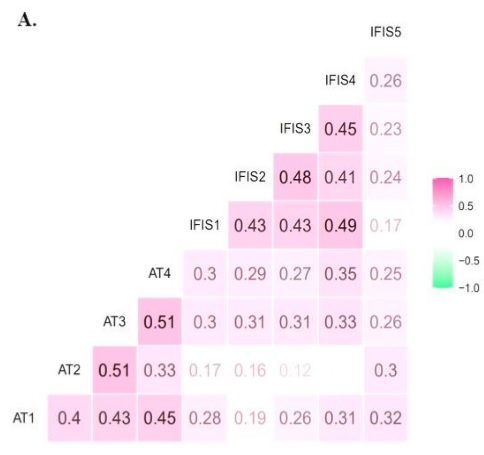
Results: the mean score was higher for suicidal ideation (M = 11,56) compared to entrapment (M = 9,14). The regression model was acceptable (CFI = 0,94, RMSEA = 0,07 [90% CI: 0,04, 0,09] and SRMR = 0,05). It was observed that entrapment statistically significantly predicts suicidal ideation (β = 0,615; p = 0,001).
Conclusion: the results suggest that cancer patients are likely to experience suicidal ideation when they experience a perception of entrapment. Therefore, psychological intervention in entrapment, may be useful in suicide prevention programs in adults with cancer.
Article Details

This work is licensed under a Creative Commons Attribution 4.0 International License.
Usted es libre de:
- Compartir: copiar y redistribuir el material en cualquier medio o formato para cualquier propósito, incluso comercialmente.
- Adaptar: remezclar, transformar y construir a partir del material para cualquier propósito, incluso comercialmente.
- La licenciante no puede revocar estas libertades en tanto usted siga los términos de la licencia
Bajo los siguientes términos:
- Atribución: Usted debe dar crédito de manera adecuada, brindar un enlace a la licencia, e indicar si se han realizado cambios. Puede hacerlo en cualquier forma razonable, pero no de forma tal que sugiera que usted o su uso tienen el apoyo de la licenciante.
- Compartir igual: — Si remezcla, transforma o crea a partir del material, debe distribuir su contribución bajo la misma licencia del original.
- No hay restricciones adicionales — No puede aplicar términos legales ni medidas tecnológicas que restrinjan legalmente a otras a hacer cualquier uso permitido por la licencia.
References
Organización Mundial de la Salud. Cáncer [Internet]. Ginebra: Organización Mundial de la Salud; 2022 [citado: 05 dic 2024]. Disponible en: https://www.who.int/es/news-room/factsheets/detail/cancer
Lang-Rollin I, Berberich G. Psycho-oncology. Dialogues Clin Neurosci. 2018;20(1):13-22. doi: 10.31887/DCNS.2018.20.1/ilangrollin
Bobevski I, Kissane DW, Vehling S, Mehnert-Theuerkauf A, Belvederi Murri M, Grassi L. Demoralisation and its link with depression, psychological adjustment and suicidality among cancer patients: a network psychometrics approach. Cancer Med. 2022;11(3):815-825. doi:
1002/cam4.4406
Lucht L, Höller I, Forkmann T, Teismann T, Schönfelder A, Rath D, et al. Validation of the motivational phase of the integrated motivational–volitional model of suicidal behavior in a German high-risk sample. J Affect Disord. 2020;274(1):871-79. doi: 10.1016/j.jad.2020.05.079
Zhang Y, Ding X, Chen J, Liu Y, Wang G, Hu D. Moderating effects of suicide resilience and meaning in life on the association between entrapment and suicidal ideation in Chinese patients with ovarian cancer: a cross-sectional study. BMC Psychiatry. 2023;23(1):585. doi: 10.1186/s12888-023-05057-4
Kolva E, Hoffecker L, Cox-Martin E. Suicidal ideation in patients with cancer: a systematic review of prevalence, risk factors, intervention and assessment. Palliat Support Care. 2020;18(2):206-19. doi: 10.1017/S1478951519000610
Baños-Chaparro J, Ynquillay-Lima P, Caycho-Rodríguez T. Evidencias psicométricas de las escalas de derrota y atrapamiento en adolescentes peruanos. Liberabit [Internet]. 2024 [citado: 10/12/2024];30(2):e868. doi: 10.24265/liberabit.2024.v30n2.868
Baños-Chaparro J, Ynquillay-Lima P, Lamas Delgado F, Fuster Guillen FG. Inventario de Frecuencia de Ideación Suicida: evidencias psicométricas en adultos peruanos. Rev Inf Cient [Internet]. 2021 [citado: 10 dic 2024];100(4):e3507. Disponible en:
http://scielo.sld.cu/pdf/ric/v100n4/1028-9933-ric-100-04-e3507.pdf
Funder DC, Ozer DJ. Evaluating effect size in psychological research: sense and nonsense. Adv Methods Practic Psychol Sci. 2019;2(2):156-68. doi: 10.1177/2515245919847202
Jordan Muiños FM. Valores de corte de los índices de ajuste en el análisis factorial confirmatorio. Psocial [Internet]. 2021 [citado: 11/12/2024];7(1):1-5. Disponible en: http://portal.amelica.org/ameli/jatsRepo/123/1232225009/1232225009.pdf
Bisht J, Rawat P, Sehar U, Reddy PH. Caregivers with cancer patients: focus on hispanics. Cancers (Basel). 2023;15(3):626-49. doi: 10.3390/cancers15030626
McIntyre R, Ferretti M. Mind Over Matter: a group intervention integrating CBT, ACT, and psychoeducation to empower emotional coping in cancer patients and caregivers. J Psychosoc Oncol. 2025;1–13. doi: 10.1080/07347332.2025.2531106.